Physical Address
304 North Cardinal St.
Dorchester Center, MA 02124
Physical Address
304 North Cardinal St.
Dorchester Center, MA 02124

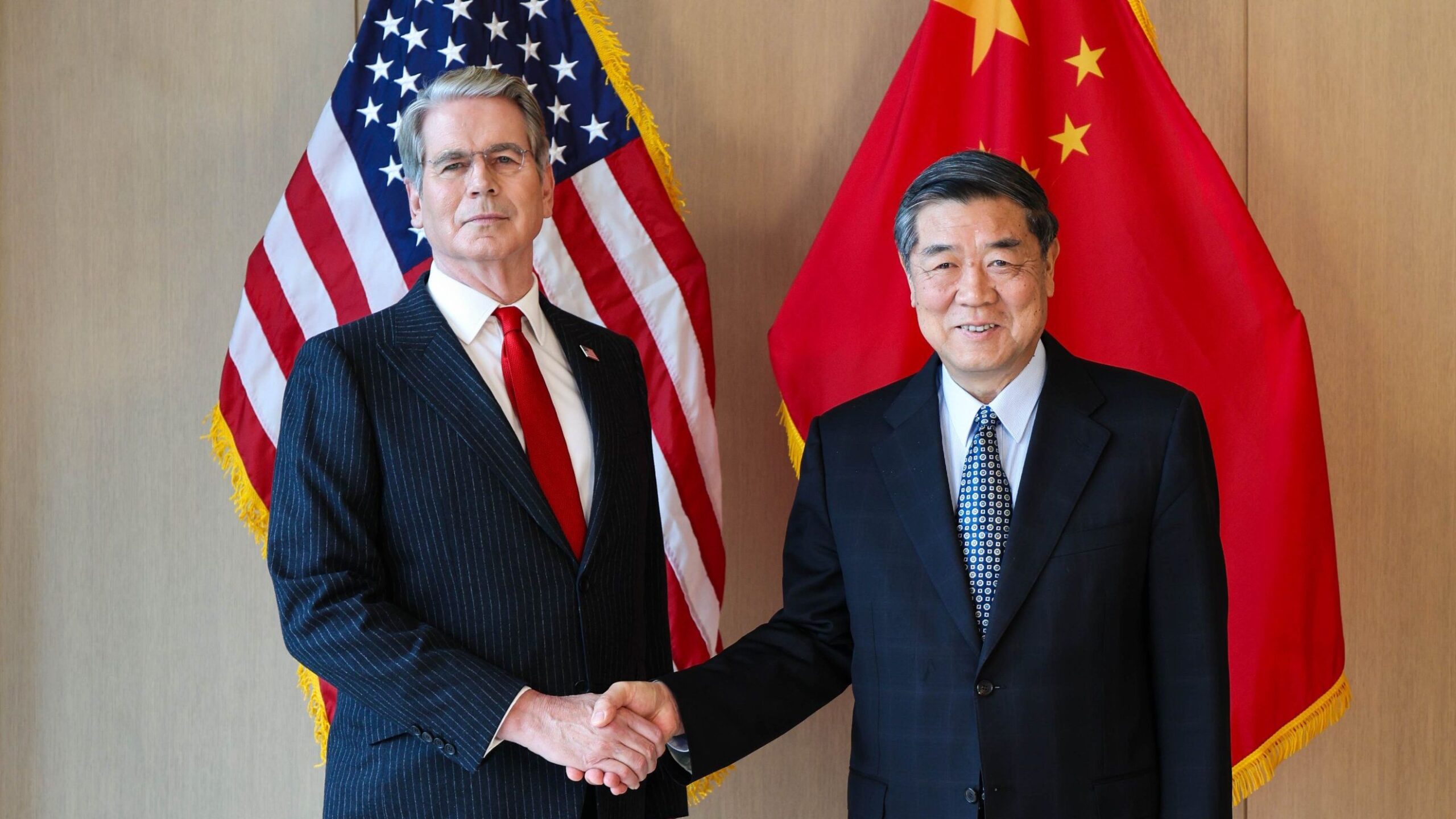
The United States and China are discussing the creation of a new communication mechanism for reporting artificial intelligence incidents that could pose national security risks, in a rare area of potential cooperation between the world’s two leading AI powers.
US Treasury Secretary Scott Bessent disclosed the proposal after holding talks in New York on Sunday with Chinese Vice Premier He Lifeng. The discussions were aimed at preparing the ground for a planned meeting between US President Donald Trump and Chinese President Xi Jinping in Washington later this week.
Bessent said the proposed mechanism would focus on incidents involving AI that rise to the level of national security concerns. He described the broader objective as creating greater transparency between Washington and Beijing at a time when both countries are competing aggressively for technological leadership.
“We want a shared vision of common goals and common threats,” Bessent said.
He added that greater transparency was important because AI development increasingly crosses national borders and can have consequences beyond the countries where systems are developed.
Under the proposal, the US and China would establish an AI dialogue that could provide a way for the two governments to communicate when serious AI-related incidents occur.
The exact structure, scope and enforcement of the proposed notification mechanism have not yet been made public. China’s response to the proposal was also not fully detailed following the New York talks. Reuters reported that the two sides agreed to continue discussions on AI.
The proposal comes as governments and technology companies grapple with questions about how increasingly powerful AI systems should be monitored and controlled.
Potential concerns include cyberattacks, misuse of advanced AI systems, threats to critical infrastructure and other scenarios in which AI capabilities could create risks extending beyond national borders.
The discussions highlight an unusual tension in the US-China relationship.
Washington and Beijing are competing intensely for leadership in artificial intelligence, advanced computing and semiconductor technology. At the same time, both governments have an interest in avoiding situations in which powerful AI systems create risks that neither side can easily contain.
US officials have also maintained restrictions on China’s access to some advanced technologies, particularly sophisticated AI chips and semiconductor manufacturing equipment. Reuters reported that those export controls were not part of the specific AI notification-mechanism discussions in New York.
This means the proposed dialogue does not represent an end to the wider technology rivalry. Instead, it would create a channel for communication around selected risks while competition continues in other areas.
The AI discussions came just days before Trump and Xi are expected to meet at the White House.
The two leaders previously discussed possible cooperation on AI during their May meeting in Beijing, although a formal consultation mechanism was never established.
AI is expected to feature alongside trade and other strategic issues during the upcoming summit.
US Trade Representative Jamieson Greer said the New York discussions were also intended to prepare the ground for the leaders’ meeting.
Bessent and Greer said the two sides also made progress toward operationalising a proposed “Board of Trade” mechanism.
The process is expected to examine possible tariff reductions on selected non-sensitive goods. Potential areas mentioned by US officials include consumer products, agricultural goods, energy products and some medical devices.
The broader US-China trade relationship remains unsettled, with both sides continuing to negotiate over tariffs, market access and other economic issues.
Critical minerals and several previous commitments also remain areas of discussion.
An incident-notification system would not necessarily resolve the larger disagreements between Washington and Beijing over AI.
However, a direct communication channel could provide a way for officials to exchange information quickly if an AI-related event were considered serious enough to threaten national security.
That could become increasingly important as AI systems become more capable and are integrated into areas such as cybersecurity, finance, defence, communications and critical infrastructure.
The challenge will be determining what qualifies as a reportable incident, who receives the information, how quickly it must be shared and whether either government would trust the other enough to disclose sensitive information.
The emerging US-China AI dialogue carries implications well beyond Washington and Beijing.
For African countries, the global AI race presents both opportunities and risks. Greater cooperation between the world’s two largest AI powers could contribute to international discussions about responsible AI development, cybersecurity and standards for emerging technologies.
At the same time, African governments and businesses will need to consider how global AI rules could affect access to technology, data governance, digital infrastructure and the development of local AI industries.
The proposed US-China mechanism is still at an early stage. Its significance will depend largely on whether the two countries can translate the idea of greater transparency into a functioning system that survives their wider strategic rivalry.
For now, the proposal represents a notable development: the world’s two leading AI powers are exploring whether communication over the technology’s most serious risks can exist alongside their competition for technological dominance.
Join African360 WhatsApp Channel for more News update: https://whatsapp.com/channel/0029Vb7Oc6nGk1FpdCN0xn44