Physical Address
304 North Cardinal St.
Dorchester Center, MA 02124
Physical Address
304 North Cardinal St.
Dorchester Center, MA 02124

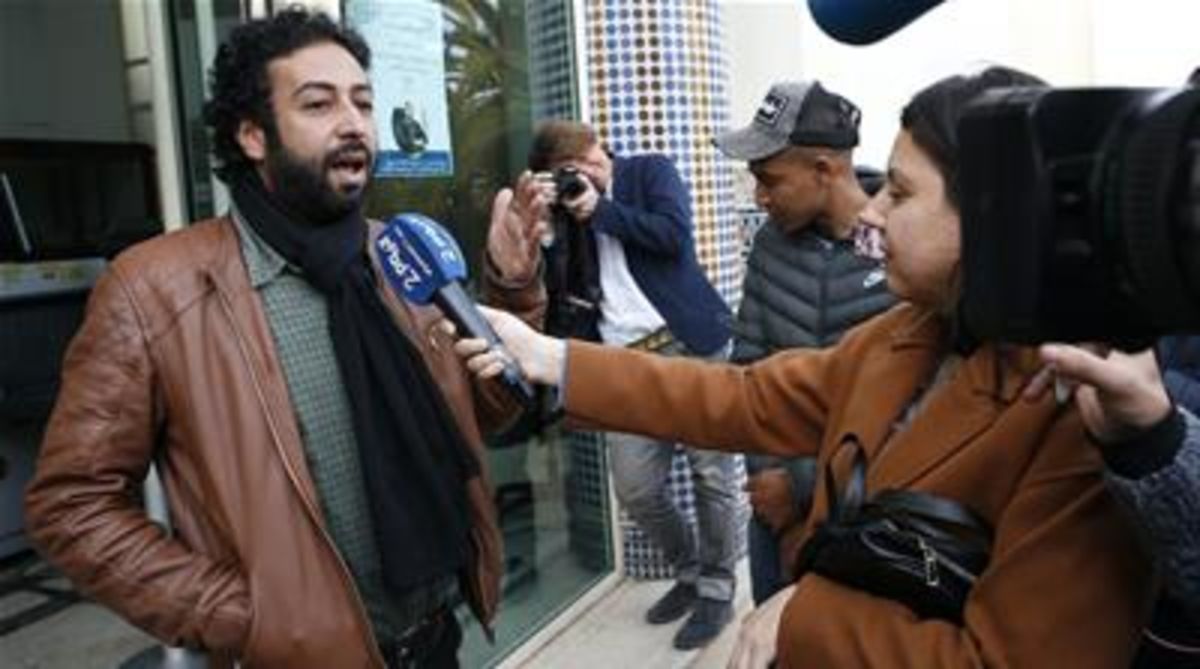
A new Amnesty International investigation alleges that Morocco operated an extensive surveillance system targeting journalists, human rights defenders and other critical voices, including through Pegasus spyware and physical monitoring.
RABAT, Morocco — Moroccan investigative journalist and human rights defender Omar Radi says he spent years under intense surveillance before forensic analysis of his phone confirmed that he had been targeted with Pegasus spyware.
Radi told Al Jazeera that he first noticed unusual signs between 2018 and 2020, including rapid battery depletion, overheating and slower network performance. He also described what he believed was persistent physical surveillance around his home and places he regularly visited.
His case is among those examined in a new Amnesty International investigation titled “We Start With the Verdict: Inside Morocco’s Surveillance Machine.”
Published on October 1, the report draws on technical forensic evidence, leaked surveillance records, interviews with 10 people identified as surveillance targets and testimony from a former Moroccan intelligence employee using the pseudonym Safir. Amnesty said key elements of Safir’s account were independently corroborated.
Amnesty identifies Morocco’s domestic intelligence agency, the Direction Générale de la Surveillance du Territoire (DGST), as the organisation responsible for deploying Pegasus spyware in Morocco.
According to the report, the agency used Pegasus against journalists, human rights defenders and other civil society figures between 2017 and 2021, with evidence suggesting the use may have continued beyond that period.
Amnesty’s investigation says Pegasus operations in Morocco were already functioning by October 2017.
The organisation said its analysis identified 103 Moroccan telephone numbers entered into the country’s Pegasus targeting system between September and December 2017. Of those, 65 were identifiable as members of civil society, including human rights defenders, journalists, lawyers and academics.
One of the cases involved human rights lawyer Abdessadak El Bouchattaoui, whose telephone number was reportedly entered into Morocco’s Pegasus system in September 2017 and selected repeatedly for targeting before he received an SMS containing an infection link.
Amnesty said forensic evidence had previously documented attempts to infect his device.
The report goes beyond Pegasus, describing what Amnesty says was a broader surveillance system combining digital technology with traditional intelligence-gathering methods.
Safir, described by Amnesty as a former DGST employee, alleged that targets could be secretly recorded in homes, offices, vehicles, detention facilities and public places.
He also described alleged cooperation between intelligence agents and mobile-phone retailers to provide targeted individuals with devices that had already been infected with spyware.
According to Safir’s testimony, surveillance extended to internet cafés, where computers could allegedly be infected with remote-control spyware capable of allowing operators to monitor calls, messages, photographs and audio.
Amnesty said the system also involved tracking the movements of targeted individuals and, in some cases, recruiting people around them as sources of information.
Radi said he believes his surveillance was linked to his investigative work, including reporting on land dispossession in Morocco.
He told Al Jazeera that he had initially noticed signs that something was wrong with his phone before Amnesty’s Security Lab examined the device in 2020.
Radi also described being followed physically.
According to his account, people regularly monitored his movements and obtained information from places he visited and people he knew.
The journalist was later imprisoned in Morocco following a controversial trial. Human rights organisations have criticised his prosecution and raised concerns about the treatment of journalists and activists in the country.
Radi said Amnesty’s latest findings helped connect many of the experiences he had during the period of surveillance.
Amnesty’s investigation also examines the cases of veteran activist Fouad Abdelmoumni, human rights lawyer Abdessadak El Bouchattaoui and journalist Hicham Mansouri, who now lives in exile.
The report says Abdelmoumni was secretly recorded inside his home in 2021. He believed the footage had been captured from a concealed device positioned near an air-conditioning unit.
Amnesty said Safir described the incident as an example of a surveillance operation followed by an effort to remove evidence of the monitoring.
Mansouri, meanwhile, was imprisoned in 2015 after being prosecuted on charges involving adultery and sexual exploitation. Amnesty describes the charges as fabricated and says his trial failed to meet international standards.
Moroccan authorities have previously denied allegations that they used Pegasus to target journalists, activists and critics.
Amnesty said it contacted Moroccan authorities before publishing its latest report and invited them to respond, but received no response.
Moroccan media have also challenged Amnesty’s conclusions.
Among the arguments raised is that the appearance of a telephone number in Pegasus targeting records does not, on its own, establish that the device was successfully infected or prove who authorised an alleged surveillance operation.
That distinction is important because Pegasus targeting records can indicate selection or attempted targeting, while forensic examination of a device provides different evidence about whether an infection actually occurred.
Morocco has previously demanded what it considers conclusive technical and material evidence to substantiate allegations of state involvement.
The allegations come amid longstanding concerns from international rights organisations about press freedom and the treatment of critical journalists in Morocco.
Journalist Taoufik Bouachrine, who was imprisoned after being convicted of rape and human trafficking charges that he denied, told Al Jazeera that criminal prosecutions, online smear campaigns and economic pressure had been used to discourage investigative journalism.
The UN Working Group on Arbitrary Detention previously found Bouachrine’s detention arbitrary, while the European Parliament called for his release.
Bouachrine was eventually released following a royal pardon after serving more than six years in prison.
He also said the closure of his newspaper, Akhbar Al-Youm, and the loss of advertising revenue demonstrated another way in which pressure could be placed on independent media.
Amnesty says the latest findings demonstrate that Pegasus should not be viewed as an isolated surveillance tool but as part of a broader system involving digital monitoring, physical surveillance, judicial pressure and smear campaigns.
The organisation said the combination can create a “chilling effect” on civil society, making journalists and activists increasingly cautious about their work and communications.
The report also raises questions about the role of technology companies supplying sophisticated surveillance tools to governments.
Amnesty’s investigation draws on previously unpublished internal material from NSO Group, the Israeli company behind Pegasus, obtained through a long-running US civil case brought by WhatsApp and Meta. Amnesty said the material provides additional evidence about how Pegasus is maintained, supported and operated by government customers.
Morocco’s authorities have not publicly accepted Amnesty’s latest conclusions.
For journalists and rights defenders, however, the report has renewed concerns about how sophisticated surveillance technology can be combined with traditional intelligence methods to monitor critics both inside and outside the country.
African360 WhatsApp Channel for more News update: https://whatsapp.com/channel/0029Vb7Oc6nGk1FpdCN0xn44