Physical Address
304 North Cardinal St.
Dorchester Center, MA 02124
Physical Address
304 North Cardinal St.
Dorchester Center, MA 02124

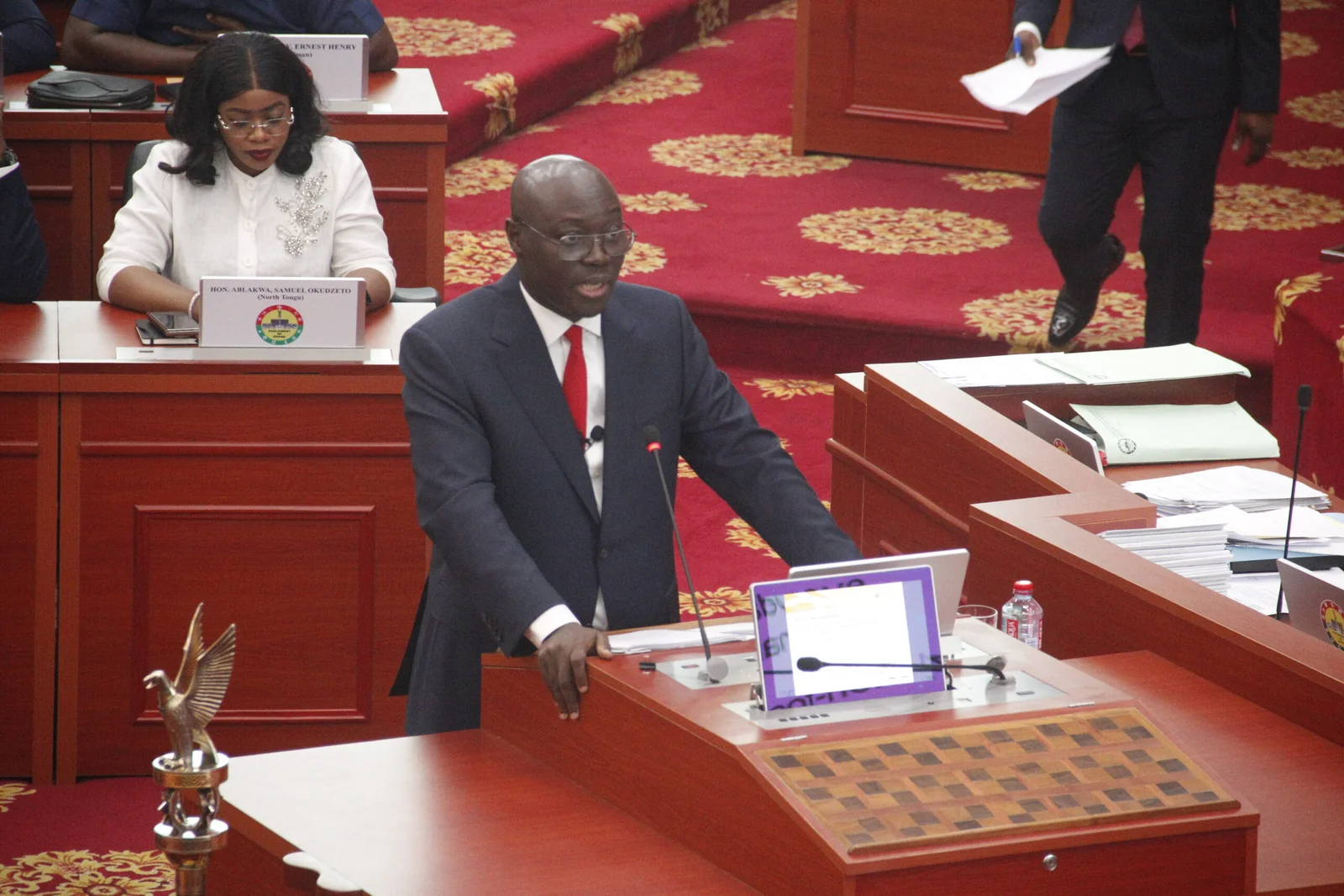
The Government of Ghana has set aside GH¢29 billion to settle domestic bonds maturing in February 2027, as Finance Minister Dr Cassiel Ato Forson prepares to present the 2027 Budget Statement and Economic Policy to Parliament.
The planned bond settlement forms part of the government’s broader strategy to strengthen public debt management, restore investor confidence and maintain fiscal stability.
Speaking to selected journalists in Accra ahead of the budget presentation, Dr Forson disclosed that the GH¢29 billion required to settle the principal on the maturing bonds had already been secured in a dedicated Sinking Fund.
He further revealed that an additional GH¢11 billion in associated interest payments, also known as coupons, would be settled by January 2028.
According to the Finance Minister, these obligations represent two of the government’s largest upcoming financial commitments.
He expressed confidence that meeting the obligations would strengthen Ghana’s credibility in the domestic bond market and reinforce confidence in the government’s financial management.
Dr Forson explained that the planned bond settlement would support the government’s efforts to reduce Ghana’s public debt burden and move the debt-to-Gross Domestic Product (GDP) ratio towards a sustainable threshold of 45%.
He emphasised that prudent debt management remains central to the government’s economic recovery programme.
The Finance Minister said the 2027 Budget would outline additional measures aimed at improving fiscal discipline, strengthening revenue mobilisation and supporting long-term economic stability.
A major highlight of the 2027 Budget is expected to be the government’s proposed $10 billion New Economy programme, which will be implemented over four years.
Dr Forson explained that the initiative would be financed through savings generated from improved tax administration, stronger revenue collection and reforms designed to eliminate financial leakages.
These measures include an overhaul of the customs regime and efforts to close loopholes in the Ghana Free Zones system.
According to the Minister, the New Economy programme seeks to transform Ghana’s economic structure by improving how government revenue is generated, managed and invested.
The programme is expected to place greater emphasis on productive investment, infrastructure development and industrial growth.
The Finance Minister also outlined changes to the government’s medium-term fiscal strategy.
He recalled that Ghana recorded a primary surplus of 2.5% of GDP in 2025, while the government remained on course to achieve a primary surplus of 1.5% in 2026.
Under the proposed 2027 fiscal framework, the primary surplus target would be reduced to 0.5% of GDP over the medium term.
Dr Forson explained that the adjustment would create additional fiscal space equivalent to approximately GH¢30 billion, which would be directed towards the New Economy programme.
The government believes this approach will allow it to maintain fiscal discipline while increasing investment in sectors capable of generating jobs and expanding economic productivity.
As part of the planned reforms, the government intends to introduce a new Loans Act to strengthen borrowing controls and ensure that public debt is used primarily for productive investment.
Under the proposed legislation, government borrowing would be restricted to capital expenditure, infrastructure development and essential public utilities.
Dr Forson indicated that borrowing would no longer be permitted to finance routine consumption expenses such as flight tickets, workshops and vehicle purchases.
The 2027 Budget is also expected to introduce amendments to the Income Tax Act and the Revenue Administration Act to improve transparency, strengthen compliance and close revenue loopholes.
Another major reform expected in the budget is the proposed merger of the Ghana Infrastructure Investment Fund (GIIF) and the Minerals Income Investment Fund (MIIF) into a new Ghana Sovereign Wealth Fund.
The proposed institution would mobilise and manage investment resources for major infrastructure and industrial development projects.
Dr Forson explained that the government also intends to introduce a Natural Resource Revenue Management Act to channel revenues from the extractive sector into the new fund.
The objective is to ensure that income generated from Ghana’s natural resources is invested in major projects capable of delivering lasting economic benefits.
The Finance Minister cited the Atuabo Gas Processing Plant as an example of a significant national project financed through petroleum-related resources.
He stressed that future natural resource revenues should be concentrated on major infrastructure investments rather than spread across numerous smaller projects with limited visible impact.
The 2027 Budget is also expected to introduce two major tax incentives to support the government’s 24-Hour Economy initiative.
These include an Accelerated Depreciation regime and a Deferred Tax regime, which are intended to encourage private-sector investment and business expansion.
Under the proposed framework, qualifying businesses could benefit from tax arrangements designed to improve investment capacity and support economic activity.
Dr Forson further disclosed that the proposed Ghana Sovereign Wealth Fund would be permitted to take equity stakes in selected 24-Hour Economy projects.
The arrangement is intended to strengthen investor confidence and encourage private-sector participation in the initiative.
The government maintains that the 24-Hour Economy programme will remain primarily private-sector-led.
Agriculture is also expected to feature prominently in the 2027 Budget, with the government planning to make approximately GH¢600 million in additional resources available to Ghana EXIM Bank.
The funding would be made possible through the removal of existing restrictions on the bank’s access to designated resources.
Under the proposed arrangement, Ghana EXIM Bank would be required to allocate at least 40% of the additional funds to agriculture, with particular emphasis on poultry production.
This means at least GH¢240 million could be directed towards agricultural development, including initiatives aimed at boosting domestic poultry production.
The government hopes the investment will reduce Ghana’s dependence on imported poultry products, strengthen local agricultural businesses and support food security.
The upcoming 2027 Budget is expected to outline a broader strategy for restructuring Ghana’s economy, strengthening domestic revenue mobilisation and improving the management of public resources.
Key priorities include meeting domestic debt obligations, reforming government borrowing, expanding infrastructure investment, supporting agriculture and encouraging private-sector participation in the 24-Hour Economy.
Dr Forson believes the proposed measures will help create a more productive and resilient economy while reinforcing confidence in Ghana’s financial management.
The success of the initiatives will ultimately depend on effective implementation, sustained fiscal discipline and the government’s ability to translate its policy commitments into measurable economic improvements.
African360 WhatsApp Channel for more News update: https://whatsapp.com/channel/0029Vb7Oc6nGk1FpdCN0xn44