Physical Address
304 North Cardinal St.
Dorchester Center, MA 02124
Physical Address
304 North Cardinal St.
Dorchester Center, MA 02124
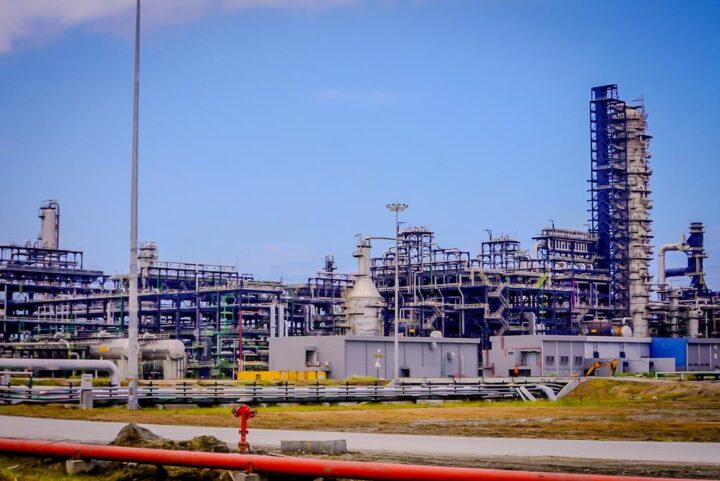
Nigeria has opened a new chapter in its long-running struggle to turn its vast oil resources into domestic economic value, with the Dangote Petroleum Refinery launching what is being described as Africa’s largest-ever initial public offering.
The public offer opened on September 14, 2026, giving investors an opportunity to acquire shares in the $20 billion refinery located in Lagos’ Lekki Free Zone.
The offer comprises 4.1 billion ordinary shares priced at ₦525 each, with a minimum subscription of 10 shares, or ₦5,250. If fully subscribed, the IPO is expected to raise about ₦2.15 trillion, equivalent to roughly $1.6 billion.
For Aliko Dangote, the public offering is about more than raising capital.
He has described it as a “People’s IPO”, arguing that Nigerians and investors across Africa should have an opportunity to own part of an industrial project that has already transformed the country’s refining landscape.
But behind the celebration lies a much bigger question:
Can the rise of domestic refining eventually translate into lower costs and better living conditions for ordinary Nigerians?
For decades, Nigeria lived with one of Africa’s most striking economic contradictions.
The country was one of the continent’s biggest crude oil producers, yet it depended heavily on imported petroleum products to meet domestic demand.
Its state-owned refineries in Port Harcourt, Warri and Kaduna struggled for years with maintenance problems, operational difficulties and periods of inactivity.
The result was a system in which Nigeria exported crude oil and then spent scarce foreign exchange importing the refined products needed by its own population.
The arrival of the Dangote refinery represents a major change to that model.
The facility began operations in 2024 and, following expansion and maintenance work, its crude-processing capacity has reached about 700,000 barrels per day.
The refinery has also increasingly supplied Nigeria’s domestic market while exporting refined products to other countries.
The scale of the Dangote project is difficult to ignore.
The refinery’s current capacity exceeds Nigeria’s domestic petroleum-product requirements in some categories, allowing the facility to serve both the Nigerian market and international customers.
According to the US Energy Information Administration, Nigeria’s seaborne petroleum-product exports averaged about 561,000 barrels per day in the second quarter of 2026, while seaborne imports fell to below 130,000 barrels per day.
That represents a significant shift from Nigeria’s previous dependence on imported refined products.
The refinery has also become an important source of petrol for the Nigerian market. Nigeria’s downstream regulator reported that Dangote supplied more than 87% of domestic petrol supply in May 2026.
The country’s refining story is therefore changing rapidly.
Nigeria is no longer simply an oil-producing country that sends crude abroad and waits for imported fuel to arrive.
It is increasingly becoming a major refining and petroleum-products trading hub.
This is where the story becomes more complicated.
The growth of domestic refining has not automatically produced cheap petrol for Nigerian consumers.
Nigeria’s decision to remove the long-standing petrol subsidy caused pump prices to rise sharply as the market moved towards more commercial pricing.
That increase has affected virtually every part of the economy.
When petrol becomes more expensive, transport operators face higher costs. Businesses pay more to move goods. Farmers face increased logistics expenses. Traders pass transportation costs on to consumers.
And households that depend on petrol-powered generators can face another layer of financial pressure.
So while domestic refining can reduce Nigeria’s dependence on imported petroleum products, it does not by itself eliminate the economic forces that determine fuel prices.
One of the biggest challenges is that crude oil remains internationally priced.
A Nigerian refinery may be physically located in Lagos, but the economics of crude oil are still heavily influenced by global prices and exchange-rate movements.
The supply of Nigerian crude to domestic refineries has also been a recurring source of tension.
The naira-for-crude arrangement was introduced partly to reduce pressure on foreign exchange and help domestic refiners obtain crude using local currency.
But disagreements have emerged over how much crude is actually being supplied under the arrangement.
NNPC has maintained that it has supplied all available crude cargoes allocated under the programme, while Dangote-linked officials have previously raised concerns about insufficient supply.
That debate illustrates an important reality:
Building a refinery is only one part of achieving energy security. Ensuring that the refinery has reliable access to competitively priced crude is another.
The success of Dangote Refinery also raises a different economic question.
For years, Nigeria’s problem was dependence on foreign suppliers.
Now, with Dangote becoming a dominant supplier of refined petroleum products, attention is shifting towards competition inside the domestic market.
A market dominated by one or a few large producers can bring efficiency and economies of scale, but it can also create concerns about competition, pricing power and access for smaller participants.
That makes the role of regulators increasingly important.
The objective should not simply be to produce fuel domestically.
It should also be to ensure that the market remains transparent, competitive and capable of passing efficiency gains through to consumers.
The Dangote IPO itself represents another major development.
The public offer gives retail and institutional investors an opportunity to participate in the ownership of one of Africa’s largest industrial assets.
The Nigerian Exchange Group described it as the first petroleum refinery to be offered to investors on the Nigerian stock market in the Exchange’s 66-year history.
The minimum subscription of 10 shares at ₦525 each was deliberately structured to allow smaller investors to participate.
The offer is scheduled to run until October 13, 2026.
For Nigeria’s capital market, the transaction is significant because it places one of the country’s most important industrial projects under public-market scrutiny.
Investors will ultimately judge the company not simply by its size, but by its profitability, crude supply arrangements, operating costs, expansion plans and ability to maintain strong margins.
The current refinery may be enormous, but Dangote’s ambition does not stop at 700,000 barrels per day.
The company plans to expand capacity to approximately 1.4 million barrels per day, potentially making the facility the world’s largest refinery.
The IPO forms part of a broader capital strategy surrounding that expansion.
The company has already completed a major private placement and is now opening the ownership structure to public investors.
If the expansion is completed successfully, Nigeria could become an even more important supplier of refined petroleum products to other African markets and beyond.
That could have implications far beyond Nigeria.
Countries across West Africa that currently import large quantities of refined fuel could potentially source more products from regional refineries rather than relying predominantly on distant suppliers.
This is ultimately the question that matters most.
A refinery can generate billions of dollars in revenue, create jobs, attract investment and reduce petroleum imports.
But the average Nigerian is likely to judge the project’s success in much simpler terms:
Can I afford transport?
Can my business operate at a reasonable cost?
Can my family afford food and electricity?
Is fuel becoming more predictable and accessible?
Those questions cannot be answered by refinery capacity alone.
They depend on crude supply, exchange rates, competition, taxation, transportation infrastructure, electricity availability, government policy and the efficiency of the wider petroleum market.
The rise of Dangote should not necessarily mean the end of Nigeria’s ambition to restore its state-owned refineries.
A functioning public refining sector could create additional competition and provide another source of domestic petroleum products.
Similarly, smaller modular refineries could play a role in serving regional markets and reducing concentration within the industry.
A diversified refining ecosystem—with large-scale plants, smaller operators and functioning public facilities—could potentially create stronger competitive pressure across the market.
But that requires effective regulation, investment and transparency.
The Dangote project is also bigger than Nigeria.
Africa remains heavily dependent on imported refined petroleum products despite being home to significant crude oil reserves.
A stronger African refining network could reduce dependence on distant suppliers, retain more value within the continent and strengthen regional energy security.
Nigeria’s experience therefore offers an important test case.
The question is no longer simply whether Africa can produce crude oil.
It is whether African countries can build the industrial capacity to refine, manufacture, finance and distribute more of what their own economies consume.
The Dangote Refinery IPO is a landmark moment for Nigeria’s capital market and petroleum industry, but its ultimate significance will be measured over time.
The refinery has already changed Nigeria’s petroleum trade by increasing domestic refining and reducing the country’s reliance on imported products.
However, energy independence and affordable energy are not exactly the same thing.
Nigeria can refine more of its own fuel while consumers continue to face high prices if crude costs, exchange-rate pressures, transportation expenses and market conditions remain elevated.
The real test, therefore, is whether Nigeria can build an entire energy ecosystem around domestic refining—one that includes reliable crude supply, competitive markets, transparent regulation, efficient transportation and investment in alternatives such as natural gas and electricity.
The IPO gives Nigerians a chance to own a piece of the refinery.
But the larger economic challenge is ensuring that the benefits of Nigeria’s industrial transformation extend beyond shareholders and major corporations to the millions of people whose daily lives depend on affordable energy.
For Nigeria, the refinery may have solved one part of the oil paradox. The next challenge is making sure the wider economy feels the benefit.
African360 WhatsApp Channel for more News update: https://whatsapp.com/channel/0029Vb7Oc6nGk1FpdCN0xn44