Physical Address
304 North Cardinal St.
Dorchester Center, MA 02124
Physical Address
304 North Cardinal St.
Dorchester Center, MA 02124

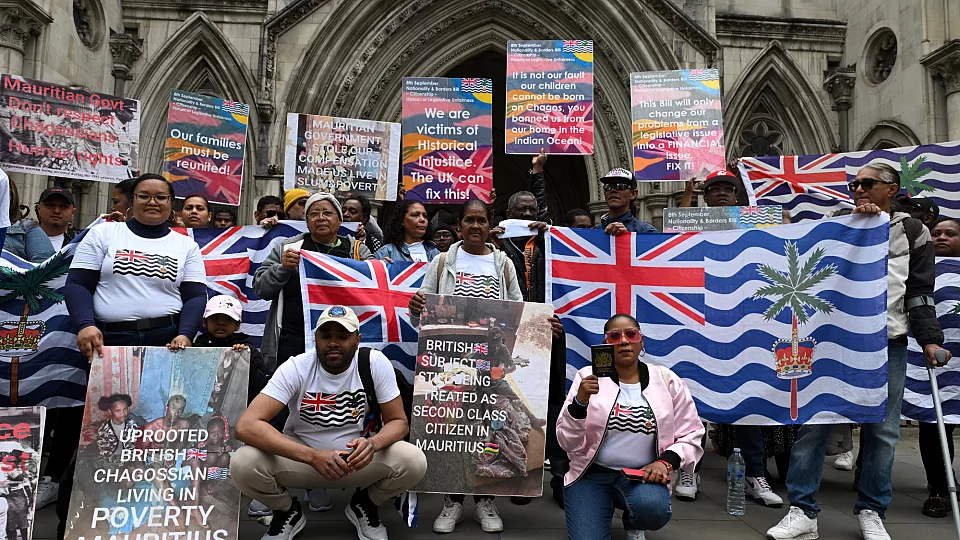
PORT LOUIS, Mauritius — For elderly Chagossians who were forcibly removed from their Indian Ocean homeland decades ago, continued delays to an agreement that could pave the way for their return are raising fears that many may never see the islands again.
“At one funeral, we scattered sand from Chagos into an elder’s tomb to honour his unfulfilled wish to breathe his last in his homeland,” said Olivier Bancoult, leader of the Chagos Refugees Group.
The comments come amid uncertainty over a treaty signed by Britain and Mauritius in May 2025 concerning the future of the Chagos Archipelago.
The agreement provides for Mauritius to exercise sovereignty over the islands while allowing Britain to retain rights over the Diego Garcia military base for an initial 99-year period. It also provides for the resettlement of Chagossians on islands other than Diego Garcia.
However, the treaty has yet to enter into force, with political and diplomatic concerns surrounding the future of the military base continuing to complicate its implementation.
“We remain unshaken by Trump’s interference in the Chagos deal,” Bancoult said.
He pointed to a 2019 advisory opinion by the International Court of Justice (ICJ), a 2021 judgment by the International Tribunal for the Law of the Sea (ITLOS), and the 2025 UK-Mauritius agreement as important developments in the Chagossian struggle.
The Chagos Archipelago was separated from Mauritius by Britain in 1965, three years before Mauritius gained independence.
Britain subsequently established a military facility with the United States on Diego Garcia, the largest island in the archipelago.
Between 1968 and 1973, an estimated 1,400 to 1,700 Chagossians were removed from the islands. Many were relocated to Mauritius and the Seychelles, while others later settled in the United Kingdom.
British authorities also restricted Chagossians from remaining on or returning to the islands without permission.
The displacement has remained a major political and legal issue between Mauritius, Britain and the Chagossian community.
The UK-Mauritius treaty was signed on May 22, 2025.
Under the agreement, Mauritius would exercise sovereignty over the Chagos Archipelago, while Britain would retain rights connected to the Diego Garcia military base for an initial 99 years.
The agreement also provides a framework for Mauritius to arrange the resettlement of Chagossians on islands other than Diego Garcia.
However, the treaty has not yet entered into force.
In April, the British government informed Parliament that legislation required to implement the agreement could not complete its passage during the 2024–26 parliamentary session. The parliamentary session ended on April 29.
The issue has since remained on the diplomatic agenda.
US President Donald Trump has previously criticised the agreement, raising concerns about whether it adequately protects the strategic importance of the Diego Garcia military base.
The issue returned to diplomatic discussions in September, with British Prime Minister Andy Burnham saying the UK would work with Mauritius and the United States to find a way forward that protects the operation of Diego Garcia and addresses UK national-security concerns.
Mauritian Prime Minister Navin Ramgoolam also travelled to Britain in late September for discussions with British officials concerning the Chagos issue.
The Mauritian government has provided limited public details about the substance of those talks.
At the United Nations General Assembly in September, Mauritian Foreign Minister Dhananjay Ramful reiterated his country’s position that Mauritius’ sovereignty over the Chagos Archipelago was non-negotiable.
For many Chagossians, the issue extends beyond sovereignty and geopolitics.
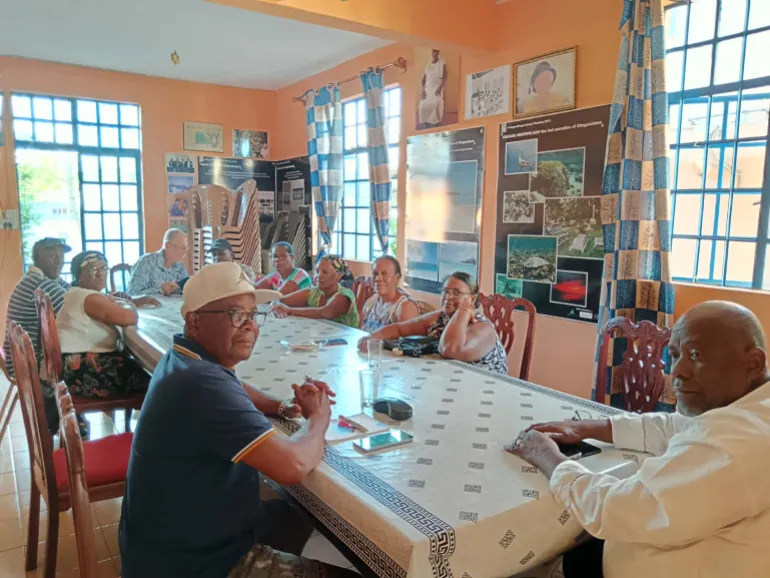
Olivier Bancoult said elderly members of the community are growing increasingly concerned that they may die before being able to return to their homeland.
“Chagossians born on the archipelago are now aged between 58 and 100. We are growing old, and we have lost several Chagossian elders this year alone,” he said.
Younger members of the diaspora are also concerned about the gradual loss of their cultural heritage.
Chrisyl Wong-Hang-Sun, a PhD researcher in anthropology at the University of Edinburgh, said members of the Chagossian diaspora had expressed concerns about preserving aspects of their culture, including Chagossian Creole vocabulary and traditional recipes.
“Descendants of Chagossians, myself included, long to know the islands of their relatives and ancestors,” she said.
The dispute has also produced differing political positions within the Chagossian diaspora.
While the Chagos Refugees Group supports the return of the islands to Mauritius and the implementation of the UK-Mauritius agreement, some UK-based second-generation Chagossians have advocated for resettlement under British sovereignty.
Wong-Hang-Sun said these differences should be recognised as discussions about the future of the archipelago continue.
She urged both the British and Mauritian governments to engage with the wider Chagossian diaspora during the process.
Mauritius has disclosed relatively little about the latest diplomatic discussions surrounding the treaty.
International relations consultant Bruno Donat has argued that Mauritius should maintain sustained engagement with diplomatic partners, including the African Union, Commonwealth institutions, small island states and sympathetic members of the US Congress.
The Chagos Refugees Group has also continued lobbying efforts in Britain.
In June, members travelled to the UK to engage representatives of British political parties over the future of the agreement.
The future of Diego Garcia remains one of the most sensitive aspects of the agreement.
Some Mauritian groups oppose the continued military use of the island and argue that retaining the base could create security and geopolitical risks for Mauritius.
Lindsey Collen of the Mauritian political organisation Lalit said the continued military presence raised concerns about Mauritius becoming associated with potential conflicts involving the base.
For Chagossians, however, the central issue remains the right to return to their ancestral homeland.
As diplomatic discussions continue, many elderly members of the community are watching closely, concerned that time may be running out before the promises contained in the 2025 agreement can become reality.
African360 WhatsApp Channel for more News update: https://whatsapp.com/channel/0029Vb7Oc6nGk1FpdCN0xn44