Physical Address
304 North Cardinal St.
Dorchester Center, MA 02124
Physical Address
304 North Cardinal St.
Dorchester Center, MA 02124

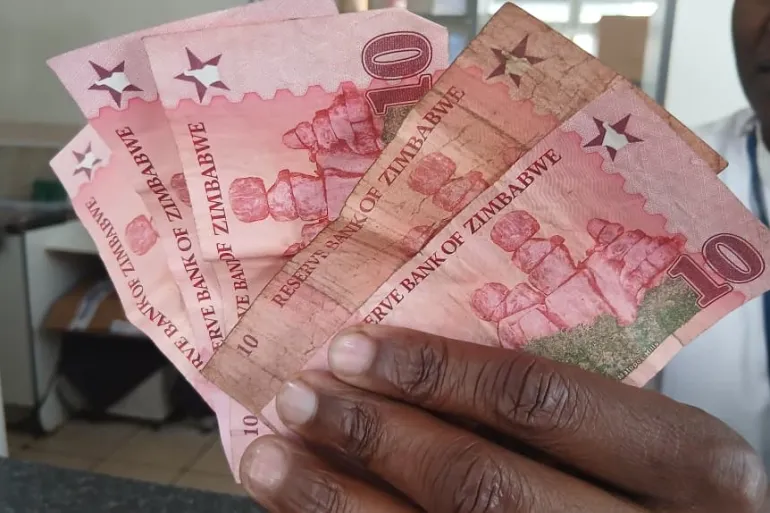
Zimbabwe is stepping up efforts to encourage the use of its gold-backed local currency, the Zimbabwe Gold (ZiG), but painful memories of previous currency collapses continue to undermine public confidence.
Introduced in April 2024, the ZiG represents the government’s latest attempt to restore monetary stability and reduce the economy’s heavy reliance on the US dollar.
The Reserve Bank of Zimbabwe (RBZ) says the currency is supported by foreign currency and precious-metal reserves, including gold. However, persuading citizens to accept it more widely remains a challenge after years of inflation, currency devaluations and losses in the value of household savings.
Zimbabwe abandoned its previous domestic currency in 2009 following a period of hyperinflation and adopted a multicurrency system dominated by the US dollar. A new local currency was introduced in 2018, but subsequent instability further weakened public trust.
For many Zimbabweans, the reluctance to hold the ZiG is rooted in personal experience.
Primary school teacher Charles Mbwandarikwa, who receives part of his salary in ZiG, says he exchanges the local-currency portion quickly rather than keeping it as savings.
His caution follows earlier losses. He says his pension savings were wiped out during the 2009 currency crisis and that the value of his salary fell sharply after the domestic currency was reintroduced in 2018.
Such experiences illustrate why official assurances about reserves and monetary policy may not be enough to convince households that the latest currency will preserve their purchasing power.
The central bank has introduced measures intended to strengthen the ZiG and improve its availability. On April 7, 2026, it began circulating upgraded banknotes with revised designs and security features.
The RBZ reported annual ZiG inflation of 3.7 per cent in September 2026, up from 2.9 per cent in August. Although inflation has remained far below the levels associated with Zimbabwe’s earlier currency crises, price stability alone does not guarantee that consumers will choose to save in the local currency.
The challenge extends beyond households to shops and other businesses, where customer preferences influence which currencies are accepted and used.
Clothing retailer Sesedzai Chigumira says she has made only a handful of sales in ZiG, illustrating the limited role the currency still plays in some everyday transactions.
When customers prefer to pay in US dollars, businesses have an incentive to continue pricing goods and managing their finances in dollars. Consumers, meanwhile, may avoid holding ZiG if they fear that its value could fall before they need to spend it.
This creates a cycle that is difficult to break: weak demand discourages businesses from relying on the local currency, while limited acceptance gives consumers fewer reasons to hold it.
Economist Cornelius Dube says demand for ZiG remains subdued and that the currency’s supply must be aligned with the level of demand for it.
The challenge is therefore not simply to put more banknotes into circulation, but to create conditions in which households and businesses are willing to use the currency voluntarily.
Zimbabwe’s authorities have been working towards a greater role for the ZiG in the economy, but the policy direction has shifted away from treating a single-currency transition by 2030 as a fixed deadline.
The International Monetary Fund said in a 2026 staff report that Zimbabwe’s economy remained heavily dollarised and that the ZiG was gaining acceptance only gradually. It noted that approximately two-thirds of transactions by value in the national payment system were conducted in US dollars.
The report also outlined conditions needed for a sustainable transition, including low and stable inflation, adequate foreign-exchange reserves, a well-functioning foreign-exchange market, a stable exchange rate and stronger demand for the local currency.
These conditions matter because a successful currency transition requires more than legal or administrative changes. Businesses need to be able to price goods reliably, workers need confidence that their wages will retain value, and savers need to believe that their deposits will remain secure.
The central bank has also encouraged wider use of ZiG in domestic payments, including tax and public-sector transactions. However, a currency’s use for payments does not necessarily mean people trust it enough to hold their long-term savings in it.
The ZiG’s association with gold and other reserve assets is intended to support its credibility. But the existence of valuable natural resources does not automatically guarantee confidence in a national currency.
People also consider the currency’s purchasing power, the stability of its exchange rate, the availability of foreign currency and the consistency of government economic policy.
Zimbabwe’s experience demonstrates the difficulty of rebuilding trust after repeated monetary crises. Even when inflation slows, households may remain reluctant to hold local money until stability has been sustained over a sufficiently long period.
The government must therefore balance its objective of reducing dollar dependence with the need to avoid policies that undermine confidence or create uncertainty for people holding foreign-currency savings.
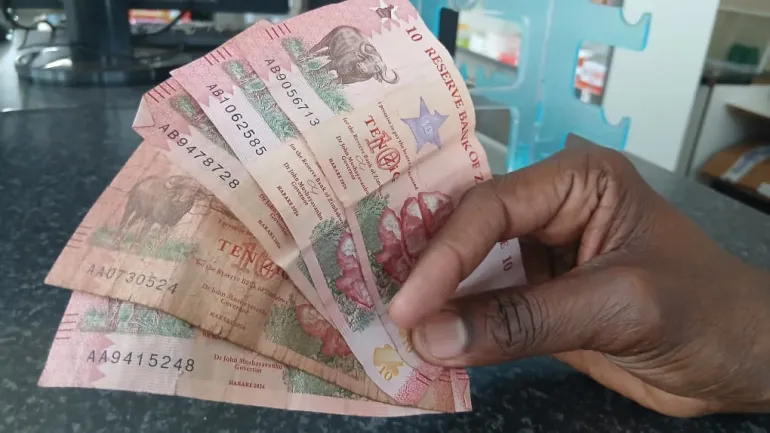
Dube argues that de-dollarisation is possible, but it cannot be achieved overnight. He says policymakers should create incentives that allow consumers and businesses to become comfortable holding either ZiG or US dollars, rather than attempting to force a rapid conversion.
That approach places the emphasis on consistent monetary management, credible institutions and economic conditions that make the local currency useful for everyday transactions and savings.
For workers such as Mbwandarikwa, the ultimate test will be whether the ZiG can preserve the value of their earnings. For retailers such as Chigumira, it will be whether customers begin using it regularly without hesitation.
Zimbabwe’s latest currency experiment has made progress in establishing a new monetary framework, but restoring public confidence remains unfinished work. The currency’s long-term prospects will depend on whether stability can be sustained and whether citizens see practical reasons to trust it with their money.
African360 WhatsApp Channel for more News update: https://whatsapp.com/channel/0029Vb7Oc6nGk1FpdCN0xn44