Physical Address
304 North Cardinal St.
Dorchester Center, MA 02124
Physical Address
304 North Cardinal St.
Dorchester Center, MA 02124

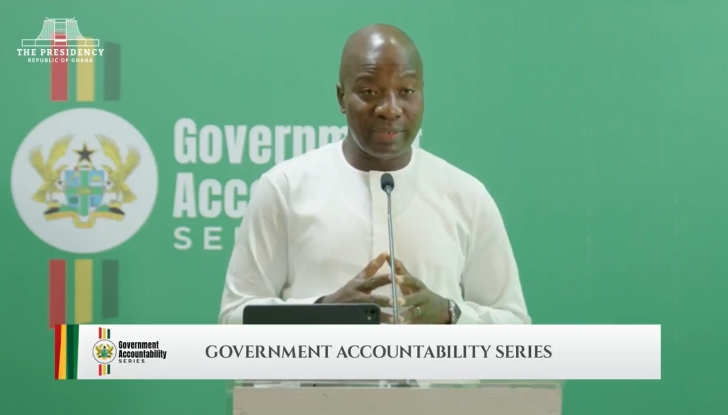
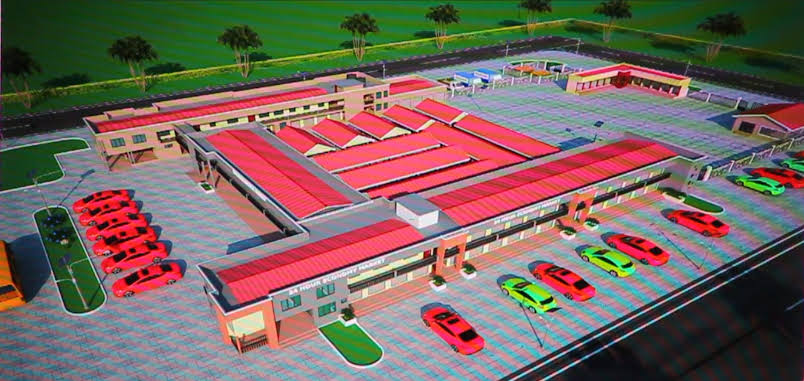
Government has redesignated its “24-hour economy markets” programme as “District Economy Markets” as it seeks to separate the market infrastructure projects from the broader 24-hour economy policy.
The government has officially renamed its “24-hour economy markets” programme as District Economy Markets, with plans to establish a model market in each of Ghana’s 261 metropolitan, municipal and district assemblies.
The Minister for Local Government, Chieftaincy and Religious Affairs, Mahama Ayariga, announced the change during the Government Accountability Series in Accra on Monday, October 5, 2026.
According to Mr Ayariga, the previous name created the impression that the government’s broader 24-hour economy programme was primarily about constructing markets.
He said the new designation better reflects the specific purpose of the projects — providing modern commercial infrastructure to support economic activity at the district level.
Mr Ayariga said the government has re-scoped the market programme into two phases to accelerate construction and establish a more structured financing arrangement.
Phase One will focus on core market facilities, including:
Phase Two will provide supporting social infrastructure, including police and fire stations.
The government is targeting 100 per cent completion of the programme by 2028.
Mr Ayariga said the second phase would subsequently be financed through future allocations from the District Assemblies Common Fund (DACF).
The minister also said a committee had been established to monitor the progress of the projects.
He warned that contractors who fail to perform could have their contracts terminated, with the affected projects reassigned to other contractors.
Mr Ayariga also announced plans to introduce a centrally controlled electronic system for collecting property rates.
Under the proposed arrangement, cash payments would be eliminated, with property owners expected to pay through mobile money platforms or electronic bank transfers.
The minister said the current property-rate collection system suffers from inefficiencies, inconvenience and corruption, including instances where money collected ends up in private hands.
The new system is intended to centralise collection, improve accountability and ensure that revenue is properly transferred to the relevant assemblies for local development.
Mr Ayariga said residents should be able to see a direct connection between the property rates they pay and services delivered in their communities.
These services could include roads, drains, street lighting, pavements and greenery.
He expressed confidence that compliance would improve when property owners see tangible improvements resulting from their payments.
The minister also provided an update on the stalled Kejetia Market Phase Two project in Kumasi.
He said negotiations had been completed to enable contractors to return to the site, following approval from Finance Minister Dr Cassiel Ato Forson.
The project, which is part of the Kumasi Central Market development, has reportedly remained stalled after a significant portion of Phase Two was left unfinished. Contractors are expected to resume work in the coming weeks.
Mr Ayariga said negotiations were also continuing regarding Phase Three of the project.
He reiterated the government’s commitment to improving conditions for market women and described the administration as a “pro-women’s government.”
Mr Ayariga also confirmed that the Board of Trustees of the National Cathedral has been formally dissolved.
The project site has been handed back to the government and placed under the Ministry of Local Government, Chieftaincy and Religious Affairs pending further decisions.
The development follows the government’s position that it will not commit additional public funds to the construction of the National Cathedral.
Mr Ayariga said the Attorney-General is reviewing a forensic audit into expenditure connected to the project under the previous administration.
The government will determine the next steps for the site after receiving the Attorney-General’s advice.
The minister also disclosed that President John Dramani Mahama has scheduled a stakeholders’ meeting for Wednesday, October 7, to review the Ayalolo bus contraflow system.
The temporary arrangement has been used to improve the movement of commuters during peak periods on congested roads.
According to Mr Ayariga, the meeting will consider the results of the trial and determine how the system can be sustained permanently.
Mr Ayariga said the broader objective of the government’s reforms is to make Metropolitan, Municipal and District Assemblies more responsive to the everyday needs of residents.
The government says the measures — ranging from modern market infrastructure and digital property-rate collection to improved urban transport and local development — are intended to strengthen local government financing and improve service delivery.
For the District Economy Markets programme, the key test will now be whether the government can meet its 2028 completion target across all 261 assemblies while ensuring that the new markets deliver the economic and social benefits promised.
African360 WhatsApp Channel for more News update: https://whatsapp.com/channel/0029Vb7Oc6nGk1FpdCN0xn44