Physical Address
304 North Cardinal St.
Dorchester Center, MA 02124
Physical Address
304 North Cardinal St.
Dorchester Center, MA 02124
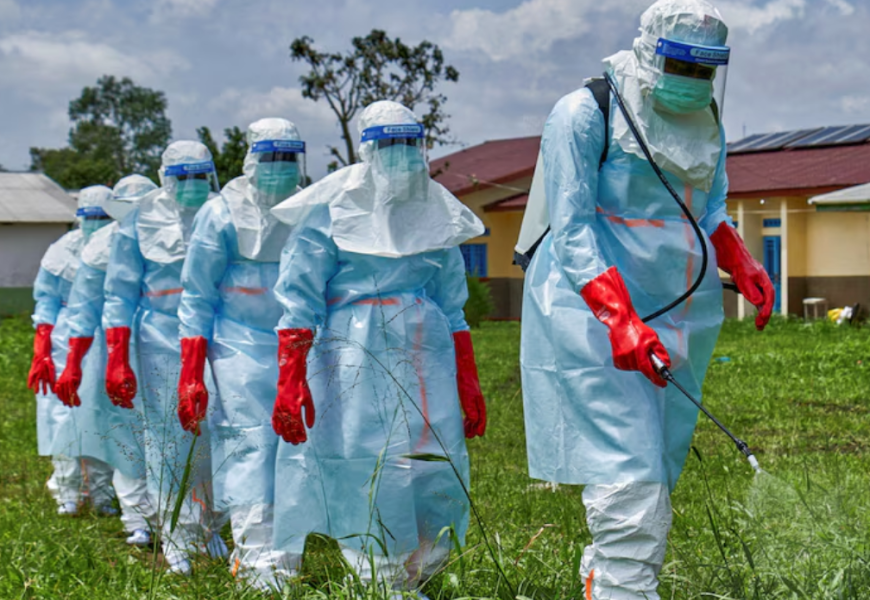
The Democratic Republic of the Congo (DRC) has recorded more than 8,000 confirmed Ebola cases and nearly 4,000 deaths as the country’s worst Ebola outbreak continues to spread.
According to the latest figures from the country’s public health authorities, the outbreak had reached 8,067 confirmed cases and 3,901 deaths by September 26, 2026, giving the epidemic a case-fatality ratio of about 48.4 per cent.
The outbreak, which was officially declared on May 15, is being caused by the Bundibugyo virus, a species of Ebola for which there is currently no licensed vaccine or specific approved treatment.
The epidemic has now become the largest and deadliest Ebola outbreak ever recorded in the DRC, surpassing the country’s previous major outbreak of 2018–2020. Globally, it is second only to the 2014–2016 West Africa Ebola epidemic in scale.
The epidemic has continued to expand geographically.
WHO reported on September 23 that cases had been recorded across 63 health zones in seven provinces, including Ituri, North Kivu, South Kivu, Tshopo, Haut-Uélé, Bas-Uélé and Sud-Ubangi.
Ituri remains the epicentre, accounting for more than 6,000 confirmed cases. North Kivu is the second most affected province, while other areas have also recorded ongoing transmission.
ECDC’s latest update said 773 patients were hospitalised in isolation as of September 27, while more than 2,000 people who had contracted the virus had recovered.
Although the rate of new infections has declined in parts of Ituri, health authorities continue to report significant transmission elsewhere.
Health authorities are facing serious challenges beyond the spread of the virus itself.
Misinformation, public mistrust, insecurity, limited healthcare capacity and poor access to remote communities are making it harder to identify cases, trace contacts and provide timely treatment.
The situation has also contributed to violence against people involved in the response.
In Butembo, North Kivu, Marie-Célestin Karondwa, a senior member of the ruling UDPS party, was reportedly fatally attacked after appearing on radio to discuss Ebola prevention measures. The circumstances surrounding the attack remain under investigation, while party officials linked it to his public support for the government’s response.
WHO and Africa CDC have repeatedly stressed the importance of working with trusted community leaders to improve acceptance of Ebola prevention and response measures.
The outbreak is placing additional pressure on an already stretched healthcare system.
WHO has identified delayed detection, limited access to care, shortages of essential supplies and difficulties reaching affected communities as major obstacles to controlling transmission.
The latest reporting also points to limited capacity at some treatment centres in Ituri.
Conflict and insecurity in parts of eastern DRC are further complicating the response, while poor roads and the remoteness of some communities make it difficult for health teams to reach suspected cases quickly.
Because the outbreak is caused by the Bundibugyo virus, health authorities cannot rely on a licensed vaccine specifically approved for this strain.
WHO says the Ervebo vaccine, which is licensed against Zaire ebolavirus, is being used for Bundibugyo virus disease only within research protocols because its effectiveness against the strain has not been established.
Vaccination of healthcare and frontline workers has nevertheless been taking place as part of research efforts.
Meanwhile, clinical trials are evaluating potential treatments for Bundibugyo virus disease. WHO reported that the PARTNERS clinical trial had enrolled more than 300 confirmed patients by early September.
Researchers are hoping the trials will provide evidence for effective treatments against a virus that remains relatively poorly studied.
International assistance is also being increased.
The United States announced an additional $267 million in health and humanitarian assistance for the Ebola response on September 23.
The funding will support Ebola treatment units, safe and dignified burial teams, personal protective equipment, surveillance, medical supplies and contact tracing. The US government said its direct assistance for the outbreak had reached $887 million.
The additional funding comes as international health organisations call for more resources to strengthen the response.
Despite signs of slowing transmission in some locations, health authorities warn that the outbreak remains dangerous.
WHO and Africa CDC have called for stronger community engagement, faster case detection, improved contact tracing, greater access to treatment and stronger support for frontline health workers.
The geographic expansion of the outbreak has also raised concerns about cross-border transmission, particularly because some affected areas are close to Uganda and South Sudan.
For now, the DRC remains at the centre of an escalating Ebola crisis that has already claimed nearly 4,000 lives.
With more than 8,000 confirmed cases and continued transmission across seven provinces, health authorities and international partners face a major challenge in bringing the epidemic under control.
African360 WhatsApp Channel for more News update: https://whatsapp.com/channel/0029Vb7Oc6nGk1FpdCN0xn44