Physical Address
304 North Cardinal St.
Dorchester Center, MA 02124
Physical Address
304 North Cardinal St.
Dorchester Center, MA 02124
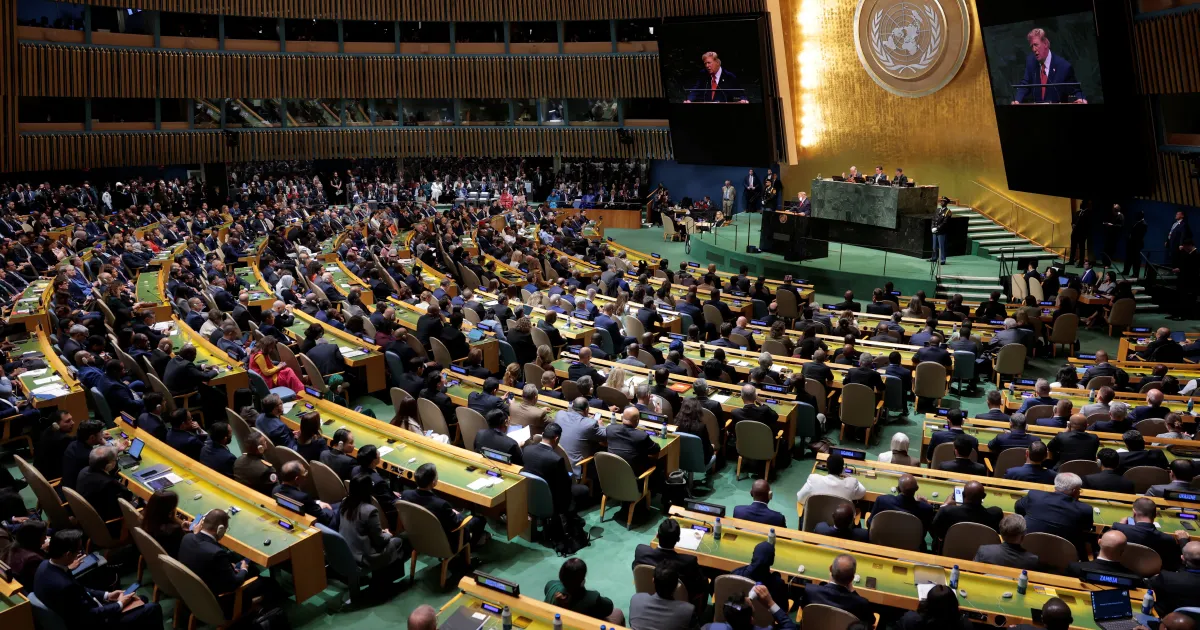
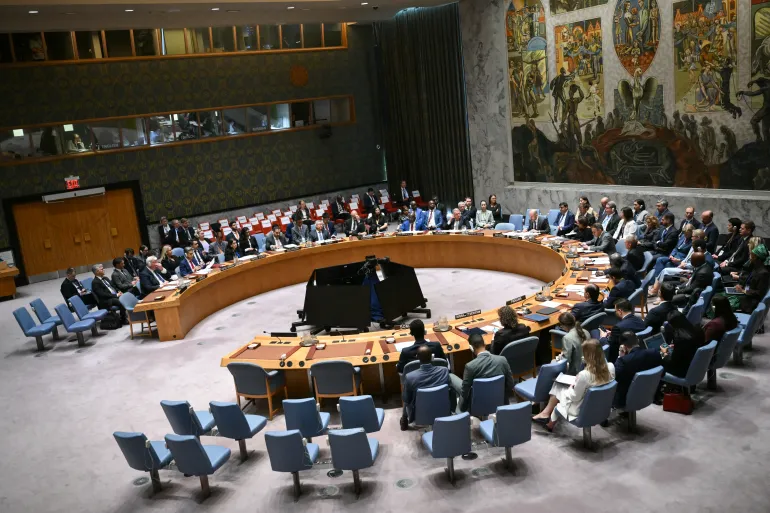
African leaders have renewed the continent’s demand for permanent representation on the United Nations Security Council, arguing that an institution created in the aftermath of World War II no longer reflects the realities of the modern world.
Africa’s decades-long campaign for a stronger voice at the United Nations Security Council has returned to the centre of diplomatic discussions at the 81st UN General Assembly, with Ghana and Nigeria among the countries pressing for structural reform.
UN Secretary-General António Guterres has also renewed his call for a more representative Council, saying underrepresented regions — particularly Africa — must have a meaningful place in the body’s decision-making structure.
Nigeria’s Vice President Kashim Shettima, speaking on behalf of President Bola Tinubu, called for at least two permanent African seats, with veto powers for as long as the veto remains part of the Council’s system. Nigeria also supports five non-permanent African seats.
Ghanaian President John Mahama similarly argued that Security Council reform should not be viewed as a concession to Africa, but as an issue tied to the legitimacy and credibility of the United Nations.
The renewed campaign, however, faces a fundamental challenge: how to turn broad political support into an agreement capable of changing the UN Charter.
The UN Security Council currently has 15 members.
Five — China, France, Russia, the United Kingdom and the United States — are permanent members and possess veto power.
The remaining 10 members are elected by the General Assembly for two-year terms.
No African country holds a permanent seat.
That absence has become increasingly contentious because African conflicts and security issues account for a substantial part of the Council’s workload.
According to analysis cited by Al Jazeera, the Security Council adopted 44 resolutions in 2025, including 24 under Chapter VII of the UN Charter. Eighteen of those Chapter VII resolutions concerned Africa.
African governments therefore argue that a continent frequently affected by Security Council decisions should have permanent representation in the institution making those decisions.
Africa’s demand is not simply a collection of separate national campaigns.
The African Union’s Common African Position, developed through the Ezulwini Consensus and Sirte Declaration, calls for:
The AU reaffirmed this position in 2026, instructing its Committee of Ten Heads of State and Government — commonly known as the C-10 — to continue lobbying the existing permanent members and other regional groups.
This means that while countries such as Nigeria, Egypt and South Africa have expressed interest in permanent representation, the AU has not selected specific countries to occupy the proposed seats.
Nigeria has repeatedly presented itself as a potential African candidate for a permanent seat.
At the current General Assembly, Abuja again called for at least two African permanent members with the same rights and responsibilities as the existing permanent members.
Supporters of Nigeria’s position point to its population, economic weight, regional role and longstanding participation in African and international diplomacy.
The argument is not simply about national prestige.
A permanent African seat would give the continent a continuous presence in discussions involving international peace, conflict, sanctions, peacekeeping operations and the use of force.
However, the question of which African countries would ultimately occupy the seats remains one of the most difficult issues within the continental debate.
Ghana has also continued to support reform.
President Mahama has framed the issue around the credibility of the multilateral system, arguing that Africa’s exclusion undermines the legitimacy of an institution whose decisions can have major consequences for the continent.
The argument reflects a wider African position that global governance structures still largely reflect the balance of power that existed when the United Nations was established in 1945.
The UN Secretary-General made a similar point in his opening remarks at the 81st General Assembly, saying Africa’s continued underrepresentation after eight decades is difficult to justify given the continent’s importance to the UN system and peacekeeping.
Expanding the Council is only one part of the problem.
The more difficult question is what powers new permanent members would receive.
The AU’s position is that African permanent members should receive the same privileges as the existing five, including veto rights for as long as the veto continues to exist.
That position is significant because simply adding African countries without equivalent decision-making powers would not fully address the imbalance Africa says it is seeking to correct.
The veto itself is also one of the most controversial elements of Security Council reform.
Any change would require negotiations among countries with very different interests — including the five states that currently possess the veto.
The push for reform is not new.
The General Assembly formally launched intergovernmental negotiations on Security Council reform in 2008.
The discussions cover several issues, including the Council’s size, categories of membership, regional representation and the veto.
The negotiations have continued across successive General Assembly sessions, but the major questions remain unresolved.
The difficulty is partly structural.
Under Article 108 of the UN Charter, an amendment requires approval by two-thirds of the General Assembly and ratification by two-thirds of UN members — including all five existing permanent members.
In practical terms, the countries whose privileged position would be affected by reform have a formal role in approving the changes.
Supporters of reform argue that the issue is not merely about adding seats.
It is also about who has influence over decisions affecting African conflicts.
Former Nigerian foreign minister and UN diplomat Ibrahim Gambari has argued that African countries serving as elected members often have limited influence over the Council’s broader agenda, despite the frequency with which African issues appear before it.
The debate also extends to UN peacekeeping missions, sanctions and international responses to conflicts on the continent.
From this perspective, permanent representation would give Africa greater continuity in shaping decisions rather than relying on temporary two-year membership.
There are several unresolved questions.
First: How many permanent seats should be added?
Second: Which African countries would occupy them?
Third: Should new permanent members have veto power?
Fourth: Should the Council expand its membership beyond Africa to include other underrepresented regions?
Fifth: Would all five existing permanent members support the necessary Charter amendment?
These questions explain why political support for reform has not yet translated into structural change.
The UN itself acknowledges that negotiations remain ongoing and is encouraging member states to develop proposals that could eventually produce a consolidated model acceptable to a broad coalition of countries.
The latest push comes as African governments increasingly seek greater influence over international institutions.
The AU has repeatedly argued that Africa’s demographic, political and economic importance is not reflected adequately in global governance structures.
The AU Commission has described the demand for permanent representation as an effort to correct what it calls a historical imbalance, while urging African states to maintain a united negotiating position.
That unity may prove particularly important.
If individual African countries campaign separately for permanent seats, the continent could face competing national claims.
The AU’s current framework instead seeks to establish a common position first and allow the continent to determine its representatives collectively.
For now, Africa’s demand remains a proposal rather than an agreed reform.
The 81st General Assembly has once again placed the issue high on the diplomatic agenda, but there is no confirmed timetable for adding permanent African members to the Security Council.
The next phase will depend on negotiations between African states, other UN member countries and, critically, the five existing permanent members.
For Africa, the challenge is therefore no longer simply keeping the issue alive.
It is turning a long-standing political demand into a negotiated institutional change.
Africa’s Security Council campaign is ultimately about representation, influence and the structure of global decision-making.
The continent has maintained a common position for more than two decades, and the AU continues to call for two permanent seats and five non-permanent seats.
But there is an important distinction between political momentum and institutional reform.
The renewed statements from Ghana, Nigeria and the UN Secretary-General demonstrate that the issue remains prominent. Yet changing permanent membership requires a difficult Charter amendment process involving the existing permanent members.
The question of African representation also contains an internal challenge: the AU has not yet selected which countries would occupy any future permanent seats.
For now, therefore, the debate is about establishing the principle and negotiating the framework.
If reform eventually moves forward, Africa will have to address both sides of the equation — securing permanent representation at the global table and agreeing on how the continent’s collective interests should be represented once it gets there.
After 81 years of a Security Council whose permanent membership has remained unchanged, Africa is again asking whether the world’s most powerful international security body can continue to reflect a geopolitical order that began in 1945.
African360 WhatsApp Channel for more News update: https://whatsapp.com/channel/0029Vb7Oc6nGk1FpdCN0xn44