Physical Address
304 North Cardinal St.
Dorchester Center, MA 02124
Physical Address
304 North Cardinal St.
Dorchester Center, MA 02124

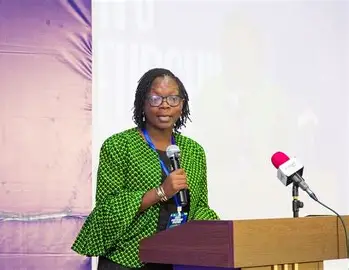
The Citizens’ Platform on Constitutional Reform (CPCR) has called on the government to end the allocation of portions of the District Assemblies Common Fund to Members of Parliament, arguing that the practice blurs the constitutional separation between Parliament’s legislative responsibilities and local development functions.
The call was made by Professor Akosua Keseboa Darkwah, Chairperson of the CPCR Steering Committee, during a press conference in Accra where the group presented its position on the ongoing constitutional reform process and the government’s response to the recommendations of the Constitution Review Committee chaired by Professor H. Kwasi Prempeh.
The CPCR is a coalition involving civil society organisations, professional bodies, labour groups and citizen movements working to promote public participation and accountability in Ghana’s constitutional reform process.
Prof. Darkwah argued that continuing to channel part of the District Assemblies Common Fund to MPs creates an overlap between the work of legislators and the executive and development responsibilities of local government authorities.
The group therefore wants all such allocations to MPs discontinued, with the funds directed through the appropriate local government structures.
The position forms part of a broader CPCR argument for clearer institutional boundaries within Ghana’s system of governance.
The CPCR also wants the proposed Democracy Fund to receive stronger constitutional protection.
The government has proposed establishing the fund through ordinary legislation, with funding subject to annual executive decisions.
Prof. Darkwah said that approach should be reconsidered.
She argued that the Democracy Fund, alongside funding for institutions such as the Electoral Commission, the National Commission for Civic Education (NCCE), and the Commission on Human Rights and Administrative Justice (CHRAJ), should be constitutionally protected and ring-fenced.
The concern, according to the CPCR, is that institutions responsible for protecting democratic participation and accountability should not have their financial independence depend heavily on annual executive discretion.
Another major area of disagreement concerns the proposed election of Metropolitan, Municipal and District Chief Executives.
The government has accepted the principle of electing District Chief Executives but its wider constitutional reform position includes arrangements involving presidential nomination, shortlisting and vetting.
The CPCR wants the process to be more open.
Prof. Darkwah said eligible citizens should be able to contest without being filtered through institutions controlled by the Executive.
The group’s position is consistent with its earlier call for elected MMDCEs without presidential nomination, shortlisting or vetting.
The group is also questioning the government’s proposal to increase Parliament’s maximum size from the existing 276 constituency seats to 300 members.
Under the government’s proposal, 276 MPs would continue to be elected from constituencies, while an additional 24 seats would be allocated through proportional representation for women, young people and persons with disabilities. The government says an independent study would guide the design of the proportional representation component.
Prof. Darkwah, however, argued that the proportional representation study should be conducted before any expansion of Parliament.
The CPCR wants a meaningful proportional representation system designed within the existing ceiling of 276 MPs rather than adding 24 seats to the legislature.
The disagreement therefore involves both the size of Parliament and how groups that are traditionally underrepresented could gain greater access to legislative representation.
The CPCR has also raised concerns about proposed changes involving the National Media Commission (NMC).
Prof. Darkwah said the commission’s constitutional responsibility for protecting the independence of state-owned media should not be transferred to the President or institutions under the Executive.
The group wants the NMC’s authority, press-freedom mandate and funding arrangements to remain constitutionally protected.
The issue is part of the CPCR’s broader position that institutions responsible for checks and balances should maintain sufficient independence from the Executive.
The latest demands come against the backdrop of a wider CPCR campaign for a legally binding framework to guide the implementation of Ghana’s constitutional reforms.
Earlier in September, the group called for a Constitutional Reform Implementation and Roadmap Act, arguing that the process should not depend entirely on the political priorities of whichever government is in office.
The CPCR has also proposed that different constitutional amendments should not simply be bundled into one referendum question. It wants voters to have an opportunity to consider different reform areas separately, particularly because citizens may support some proposals while opposing others.
The government’s position paper, presented by Attorney-General and Minister for Justice Dr Dominic Ayine in July, accepted some recommendations of the Prempeh Committee while modifying or rejecting others.
Among the government’s proposals are a maximum Parliament size of 300, five-year presidential and parliamentary terms, elected District Chief Executives, and changes to the composition and size of government.
The government has subsequently established an 11-member Constitution Review Implementation Committee chaired by Presidential Legal Counsel and former Attorney-General Marietta Agyeiwaa Brew. The committee is tasked with considering the government’s position alongside the Constitution Review Committee’s report and developing a framework for implementation.
The CPCR, however, has urged the government not to treat its position paper as the final outcome of the reform process.
Prof. Darkwah said the issues raised by the coalition go beyond individual constitutional provisions.
She said they concern the independence of public institutions, the balance of power among the Executive, Legislature and other state bodies, citizens’ rights and the credibility of the constitutional reform process itself.
The CPCR is therefore calling for continued consultation before the government’s proposals are translated into legislation or placed before voters.
Ghana’s constitutional reform process is moving from recommendations into a more politically consequential implementation phase.
The disagreement between the government and civil society groups such as the CPCR illustrates why the process is likely to involve substantial debate before any final amendments are adopted.
At the heart of the discussion are several recurring questions: How much power should be concentrated in the Executive? How should Parliament and local government divide responsibilities? How can democratic institutions remain financially and operationally independent? And how should citizens participate in deciding constitutional changes?
The Common Fund issue is particularly significant because it touches on the relationship between MPs and local development. The CPCR’s argument is that development resources should follow the constitutional responsibilities of district assemblies rather than creating parallel channels through legislators.
The debate over proportional representation similarly raises questions about whether Ghana should expand Parliament or use its existing legislative structure differently to improve representation.
Ultimately, the credibility of the reform process may depend not only on the amendments eventually approved but also on whether citizens, political parties, civil society and state institutions believe they had a meaningful opportunity to shape the outcome.
For now, the CPCR is urging the government to keep its proposals open to further discussion as Ghana moves toward the next stage of constitutional reform.
African360 WhatsApp Channel for more News update: https://whatsapp.com/channel/0029Vb7Oc6nGk1FpdCN0xn44