Physical Address
304 North Cardinal St.
Dorchester Center, MA 02124
Physical Address
304 North Cardinal St.
Dorchester Center, MA 02124
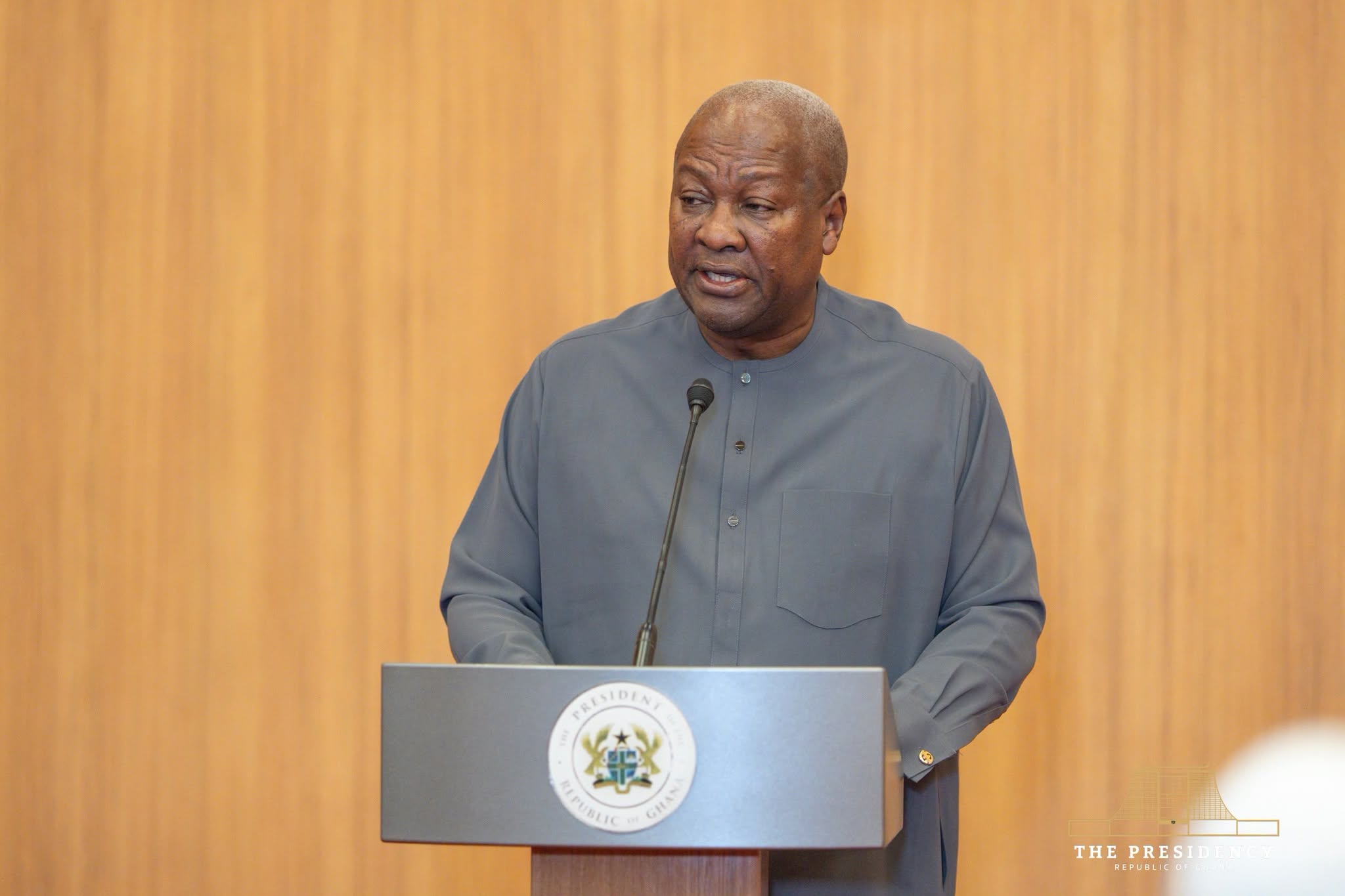
President John Dramani Mahama has outlined an ambitious vision to deepen economic ties between Africa, the Caribbean and Latin America, saying his upcoming chairmanship of the African Union could be used to bring the AU, CARICOM and CELAC closer together around trade and investment.
Speaking during a bilateral meeting with Suriname’s President Jennifer Geerlings-Simons on the sidelines of the 81st United Nations General Assembly in New York on Wednesday, September 23, President Mahama said closer cooperation among the three regions could create a major new economic partnership for the Global South.
His proposal would build on the existing African Continental Free Trade Area (AfCFTA), which he suggested could provide a foundation for expanding trade links beyond Africa.
Mahama argued that stronger economic cooperation among African, Caribbean and Latin American countries could give developing nations greater collective leverage in global economic affairs.
President Mahama said Africa already had an important foundation through the AfCFTA and questioned why its benefits could not eventually be connected with markets in Latin America and the Caribbean.
He said closer economic integration between Africa, CELAC and CARICOM could create one of the world’s largest trading groupings.
The proposal, however, remains an ambition rather than an established trade arrangement. Any such framework would require negotiations among numerous sovereign states, including agreement on trade rules, market access, customs arrangements, investment and other economic matters.
Mahama’s comments nevertheless signal an interest in using Ghana’s upcoming role within the AU to push stronger South-South economic cooperation.
The Ghanaian President specifically acknowledged Suriname’s efforts to strengthen relations between CELAC and Africa.
Mahama said that agenda could be expanded during his AU chairmanship, with closer links between Africa, the Caribbean and Latin America becoming part of the broader diplomatic and economic discussion.
The relationship between Ghana and Suriname also formed part of Wednesday’s discussions, with the two countries signing a new cooperation agreement intended to provide a framework for closer bilateral collaboration.
The meeting adds another dimension to Ghana’s diplomatic push at the UN General Assembly, where Mahama has been advocating stronger cooperation among developing countries on trade, financing, health and global governance.
Mahama also connected the proposed economic cooperation to Ghana’s leadership in advancing reparatory justice at the United Nations.
He said the coalition that supported the resolution brought together countries and communities from Africa, the Caribbean, South America and the wider African diaspora.
According to Mahama, the cooperation demonstrated during the reparatory justice process could provide a foundation for collaboration in other areas, particularly economic development.
The President said countries across the Global South face a number of common structural challenges and therefore need stronger cooperation to increase their collective influence internationally.
For decades, African, Caribbean and Latin American countries have maintained political and diplomatic links through South-South cooperation.
Mahama’s proposal places greater emphasis on turning some of those relationships into practical economic opportunities.
Potential areas for cooperation could include trade, investment, agriculture, manufacturing, energy, technology, logistics and access to markets.
For Africa, the AfCFTA provides an existing continental framework designed to increase intra-African trade and investment. Extending cooperation with external regional groupings would require separate agreements and institutional arrangements.
That distinction is important: Mahama is proposing a direction for future cooperation, not announcing the creation of a new three-region trade bloc.
Beyond the wider regional agenda, Mahama used the meeting to highlight the historical relationship between Ghana and Suriname.
He noted that diplomatic relations between the two countries date back to Ghana’s early post-independence period and expressed interest in revitalising those ties.
The President also said Ghana and Suriname already have arrangements covering diplomatic and service passports and expressed hope that discussions could eventually lead to visa-free travel for ordinary citizens.
Such an arrangement, if agreed, could potentially strengthen tourism, business exchanges, cultural links and people-to-people relations between the two countries.
President Mahama also invited President Geerlings-Simons to Ghana’s 70th Independence Anniversary celebrations on March 6, 2027.
He highlighted Ghana’s historic position as the first sub-Saharan African country to achieve independence from colonial rule in 1957.
The invitation comes as Ghana seeks to use its historical role in Pan-African diplomacy to strengthen contemporary partnerships across the Global South.
Mahama’s latest proposal fits into a broader message he has delivered during the 81st UN General Assembly.
In other engagements in New York, the President has argued for stronger domestic capacity, better financing mechanisms, greater economic self-reliance and more balanced international partnerships. He has also promoted the Accra Reset agenda as a framework for strengthening the ability of developing countries to determine and finance their own development priorities.
His proposed Africa-CELAC-CARICOM cooperation therefore forms part of a wider diplomatic argument: that developing countries can increase their negotiating power by building stronger economic and institutional partnerships among themselves.
President Mahama’s proposal comes at a time when many developing economies are looking for ways to expand markets, attract investment and reduce their vulnerability to disruptions in global trade and finance.
The concept of closer Africa-Caribbean-Latin American economic cooperation is significant, but turning the vision into a functioning trading arrangement would be considerably more complex than political declarations.
Different economies have different tariff structures, currencies, production capacities, regulations and trade priorities. Building common mechanisms would therefore require sustained negotiations and political commitment across multiple regional institutions.
For Ghana, however, the proposal could reinforce the country’s efforts to position itself as a bridge between Africa and the wider Global South.
The coming AU chairmanship will provide Mahama with a continental platform to test how much support exists for deeper cooperation with CELAC and CARICOM.
Whether that vision develops into formal trade agreements, investment partnerships or broader diplomatic coordination will depend on negotiations among the participating countries.
For now, the message from Accra is clear: Ghana wants Africa’s economic integration agenda to extend beyond the continent and connect more deliberately with partners across the Atlantic.
African360 WhatsApp Channel for more News update: https://whatsapp.com/channel/0029Vb7Oc6nGk1FpdCN0xn44