Physical Address
304 North Cardinal St.
Dorchester Center, MA 02124
Physical Address
304 North Cardinal St.
Dorchester Center, MA 02124

By African360 Editorial Team
The Minority Caucus on Parliament’s Lands and Natural Resources Committee has voiced strong concerns following Parliament’s approval of six mining lease agreements involving four mining companies, arguing that the process failed to meet important constitutional and legal standards.
The agreements cover mining operations by Golden Star Wassa Limited, Maripoma Mining Services Limited, Perseus Mining Limited, and Damang Gold Mine Limited, with projects located across the Western, Central, and Upper East Regions of Ghana.
While the ratification paves the way for continued investment in the mining sector, the Minority insists that Parliament should have subjected the agreements to more rigorous scrutiny before granting approval.
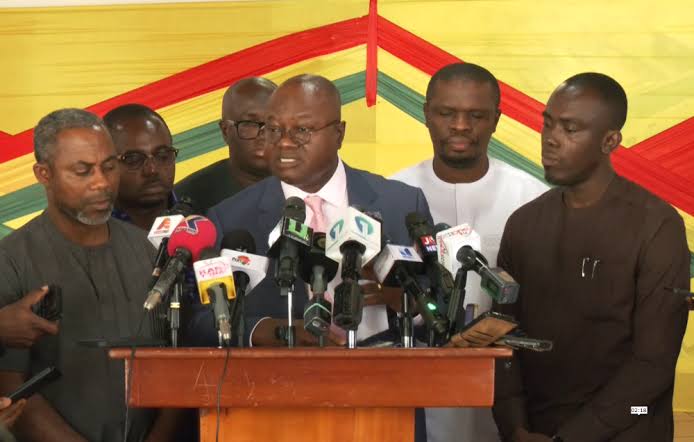
Speaking at a press conference in Parliament, the Ranking Member on the Lands and Natural Resources Committee, Kwaku Ampratwum Sarpong, outlined several concerns that the Minority believes could undermine transparency and accountability.
According to him, some of the agreements contained incomplete or questionable documentation, including:
The Minority argues that these omissions raise important legal and governance questions that deserved greater attention before parliamentary approval.
One of the strongest concerns raised relates to reports that some mining activities may have commenced before Parliament officially ratified the agreements.
According to the Minority, Ghana’s Constitution requires parliamentary approval before mineral rights become effective. They argue that allowing mining operations to begin before this constitutional process is completed could weaken Parliament’s oversight role and set an undesirable precedent.
The caucus maintains that parliamentary ratification should not become a routine administrative exercise but should serve as a meaningful constitutional safeguard to protect Ghana’s natural resources.
Particular attention has been drawn to the mining lease involving Damang Gold Mine Limited, which the Minority believes warranted more detailed examination because of its national importance.
The caucus says it requested additional documents from the Minister for Lands and Natural Resources, including reports from the Minerals Commission’s Tender Committee, but maintains that the information provided was insufficient for comprehensive parliamentary scrutiny.
The Minority also expressed disappointment that its reservations were not adequately reflected in the final committee report presented to Parliament.
Mining remains one of Ghana’s most important economic sectors, contributing significantly to government revenue, foreign exchange earnings, and employment. However, the management of the country’s mineral resources has consistently generated debate over transparency, environmental protection, and equitable distribution of benefits.
The concerns raised by the Minority highlight the importance of strong parliamentary oversight in protecting the public interest. Regardless of political affiliation, Parliament has a constitutional responsibility to ensure that agreements involving national resources comply fully with the law and provide maximum value for the Ghanaian people.
At the same time, Ghana must also maintain a stable and predictable investment environment that gives responsible mining companies confidence to invest while respecting national laws and regulations.
Achieving this balance requires transparent institutions, complete documentation, and a parliamentary process that is both rigorous and fair.
As Ghana continues to attract investment in its mining industry, future mining agreements are likely to receive even closer public and parliamentary scrutiny.
Ensuring that every agreement complies with constitutional requirements, protects national interests, and promotes responsible resource management will be essential for maintaining public trust in the sector.
The debate surrounding these six mining lease agreements serves as a reminder that transparency, accountability, and adherence to due process are critical pillars of good governance in the management of Ghana’s natural resources.
African360 will continue to monitor developments in Ghana’s mining sector and provide balanced coverage of policies, parliamentary debates, and industry reforms that affect the country’s economic future.
Follow the African360 News & Scholarships channel on WhatsApp: https://whatsapp.com/channel/0029Vb7Oc6nGk1FpdCN0xn44