Physical Address
304 North Cardinal St.
Dorchester Center, MA 02124
Physical Address
304 North Cardinal St.
Dorchester Center, MA 02124
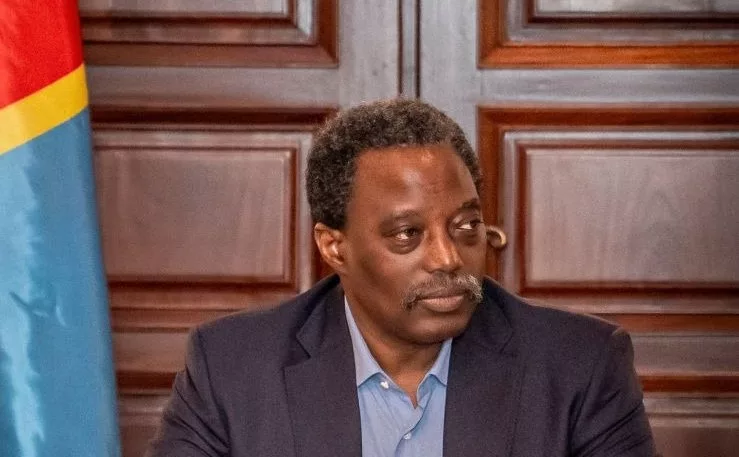
Former Democratic Republic of the Congo (DR Congo) president Joseph Kabila has been named leader of a new political-military coalition seeking to remove President Félix Tshisekedi’s government, marking a significant escalation in the country’s long-running conflict.
The Front for the Refoundation of the Nation (FRN) was unveiled on Monday, 12 October 2026, at Kabila’s residence in Goma, a major city in eastern DR Congo controlled by the M23 rebel movement since January 2025.
The coalition brings together figures from the Alliance Fleuve Congo (AFC) and M23 alliance, which has seized substantial territory in the country’s mineral-rich eastern region.
Claude Ibalanky, an adviser to the new movement, announced Kabila’s leadership and said the coalition intended to unite and coordinate resistance forces to end what it described as tyranny, using “all means necessary, including force”.
The Congolese government had not publicly responded to the announcement at the time of reporting.
The FRN includes several prominent figures associated with the AFC-M23 alliance. Four senior figures have been named as Kabila’s deputies: Corneille Nangaa, Bertrand Bisimwa, Freddy Kaniki and M23 military commander Sultani Makenga.
The coalition’s formation brings Kabila into a more direct leadership role within an armed movement challenging the government in Kinshasa.
Kabila had previously denied links to the M23 rebels, despite accusations from Congolese authorities that he supported the insurgency. His appointment as head of the new coalition represents a significant change in his public involvement in the conflict.
The group says it intends to bring together political and military forces opposed to Tshisekedi’s administration under a common structure. However, its plans, command arrangements and ability to attract additional support remain uncertain.
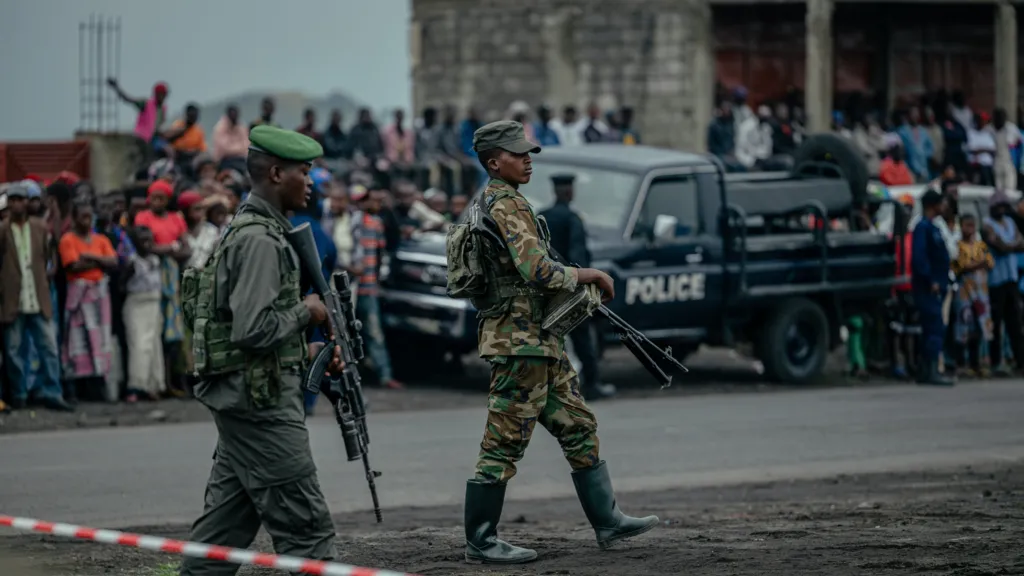
The announcement followed a public address in which Kabila criticised the government over security, the economy and constitutional governance.
The former president accused Tshisekedi’s administration of ignoring proposals he had presented to help resolve the conflict in eastern DR Congo. He also alleged that the government had undermined constitutional rule, mishandled the economy and carried out arbitrary arrests of political opponents and military officers.
Those claims had not received a public response from the government at the time of reporting.
Kabila ruled DR Congo from 2001 until January 2019, when Tshisekedi took office following a disputed election. The two leaders initially maintained an informal power-sharing arrangement but later became political opponents.
After remaining largely out of public view, Kabila went into self-imposed exile in 2023 and returned to Goma in 2025, as tensions surrounding the conflict intensified.
Kabila’s return to a prominent political and military role comes after a Congolese military court sentenced him to death in absentia in 2025 in a case involving allegations of treason and support for the M23 rebellion.
Kabila has rejected the accusations, describing the case as politically motivated.
The United States also imposed sanctions on him in May 2026, accusing him of supporting the M23 insurgency, providing financial assistance and encouraging defections from the Congolese army. Kabila has disputed the measures.
Washington said the sanctions formed part of wider efforts to support a peace agreement between DR Congo and Rwanda that the United States helped broker.
Eastern DR Congo has endured decades of armed conflict involving more than 100 militia groups, with fighting driven by political rivalries, ethnic tensions and competition for control of valuable natural resources.
The M23 movement has captured extensive territory, including Goma and Bukavu, raising concerns about the authority of the central government and the security of civilians.
The United Nations, the United States and other Western governments have accused Rwanda of supporting M23. Rwanda denies backing the rebels and says its security measures in eastern DR Congo are intended to counter threats from armed groups operating near its borders.
Kabila’s new coalition adds another layer to the conflict by bringing a former head of state into the leadership of a movement that includes established rebel figures.
The coalition’s launch also comes amid uncertainty over DR Congo’s political future.
Tshisekedi’s second presidential term is due to end in 2028. The constitution currently limits presidents to two terms, but debate over possible constitutional changes has intensified.
In May, Tshisekedi suggested that elections scheduled for 2028 might not be possible if the conflict continued. He also indicated that he could seek another term if the public wanted him to do so.
A proposed constitutional change has raised concerns among opponents, and demonstrations against possible amendments have taken place in the capital, Kinshasa.
The political dispute over the constitution is unfolding alongside the conflict in the east, creating additional uncertainty about the country’s transition toward the next election.
Richard Moncrieff of the International Crisis Group, which monitors the Great Lakes region of Africa, said the new coalition appeared designed to broaden the rebellion’s political base beyond the support currently enjoyed by M23.
According to Moncrieff, Kabila’s higher profile could help attract dissatisfied political figures and senior Congolese military officers while reducing the movement’s reliance on Rwanda, which has been accused of supporting the rebels.
The coalition’s formation could also complicate ongoing diplomatic efforts to end the fighting. Peace negotiations have sought to address tensions between DR Congo and Rwanda, but the creation of a new political-military front suggests that competing forces are also seeking greater influence on the ground.
Whether the FRN can expand its support or alter the course of the conflict remains to be seen.
For now, Kabila’s appointment signals a more direct confrontation between the former president’s new coalition and Tshisekedi’s government, at a time when security and political stability remain major challenges for DR Congo.
African360 News will continue to follow developments surrounding the FRN, the M23 conflict and regional peace efforts.
African360 WhatsApp Channel for more News update: https://whatsapp.com/channel/0029Vb7Oc6nGk1FpdCN0xn44